
 Dispatches from the valley where you pay in bitcoin.
The objections
Eleven things you hear in the shop, with our answer.
“It's a toy”
When the word processor came along, a typist with twenty years in the trade looked down on it from behind his well-oiled machine: the printer jammed, and being able to correct the last word was only for beginners. For the first cars in England, the law required someone to walk ahead with a red flag to announce you were coming.1 To experts, the new thing often looks like a toy.
The signs of the next big thing, as we listed them in Belluno in 2022: it will seem crazy, it will seem like a toy, the alternatives will seem better, it will look like a solution in search of a problem, and the experts won't recognise it.
“It'll be gone in two years”
It's called the Lindy effect: the longer something has been around, the longer you can expect it to last. When Amadori first talked about it, people told him Bitcoin had been around for two years and would be gone in another two. In 2022 they could have said the same thing with thirteen instead of two.2
“It's a bubble, like the tulips”
The tulip bubble lasted one winter, in 1637, and it was smaller than the legend makes out. Bitcoin has been running for seventeen years, and its five-year average price has practically never fallen since it could first be calculated, in 2015: from about 200 to about 59,000 dollars.3 The tulip story puts the two histories side by side.
“They'll make a better one”
How many internets do you know? There used to be lots of protocols for connecting networks; only one survived, and for twenty years it's been a struggle to move it from version 4 to version 6.4 On the promises of smart contracts, Amadori says: “That's like offering water and hops to someone who's never tasted beer and telling them it's beer.”5 What became of the others, and what we call them: the page on altcoins.
“It's too complicated”
At one of the first conferences in Trentino, in front of a group of young tech entrepreneurs, the person who understood the most and asked the best questions was an 84-year-old gentleman who was no computer expert: he already had experience of rare things, Amadori recalls.6 Anyone can grasp the idea. Holding a key yourself takes a little care, and the lesson on keeping it safe explains how.
“There's nothing behind it”
Neither is there behind the euro or the dollar: since 1971 there's been no gold behind them, as lesson 2 tells it.7 A currency is worth what it can do: last, divide, pass from hand to hand, not be made at will. Bitcoin does it with rules that anyone can check. And you don't need to buy a whole one: it divides into a hundred million satoshis, and you start with a few euros.
“It's a Ponzi scheme”
In a Ponzi scheme someone promises a return and pays the old investors with the new ones' money.8 In Bitcoin nobody promises anything to anyone: there's no operator, the code is public and you check the books yourself. Whoever promises three per cent a month is someone else, and you'll find them in the lesson on scams.
“Criminals use it”
So does cash, and always has. In 2024 addresses linked to illicit activity received 0.14% of what moved on blockchains, according to Chainalysis.9 A public ledger is a terrible place to hide: every payment stays written down for ever.
“It uses too much energy”
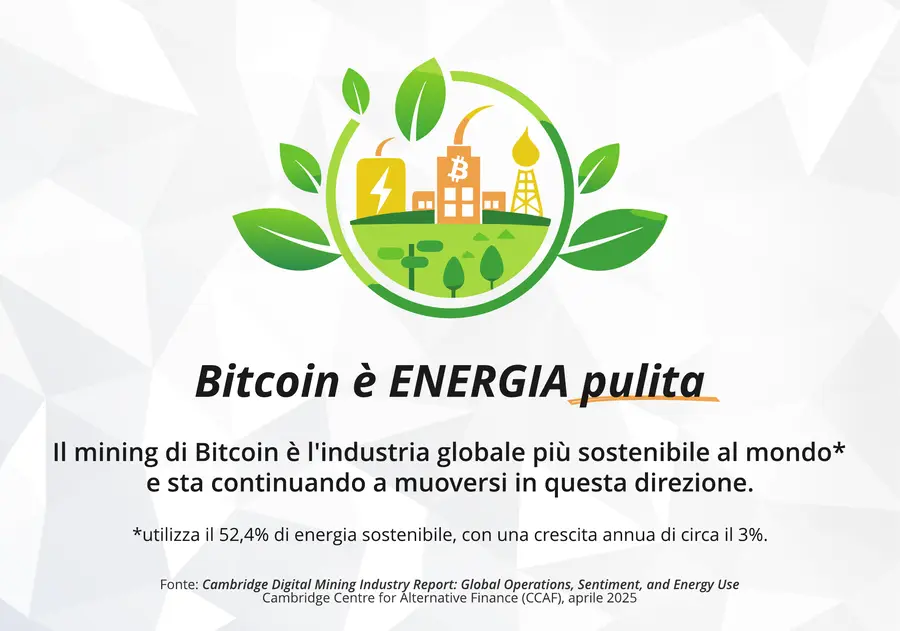
It does use energy, of course: the darts cost electricity, and that's where the security comes from. But our answer is a different one: miners go where there's surplus energy, “not because they have green hearts”, but because it's cheap there.10 In Trentino, Amadori recalls, stalled hydroelectric projects got going again because mining shortened the payback time on the investment.11 In December 2021 the municipality of Borgo d'Anaunia, in the Val di Non, decided to host a mining farm in its power plant on the Novella stream: twenty machines next to a 476 kW turbine.12 The rest is on the page about mining. Our shop-window sign quotes Cambridge: 52.4% of the electricity used in mining comes from sustainable sources, 42.6% renewables and 9.8% nuclear; in 2022 it was 37.6%. In all it is about 138 TWh a year, around 0.5% of the world's electricity: the price of a ledger that nobody can switch off or falsify.13
At our mining meet-ups there were four variables. Two the miner can predict: what energy costs and how much the machine produces. Two they can't: the difficulty, which depends on everyone else, and the price. That's why miners hunt for the cheapest energy: it's the one lever they really control.
Predictable
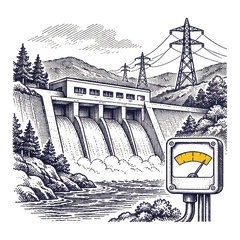 Energywhat a kilowatt-hour costs
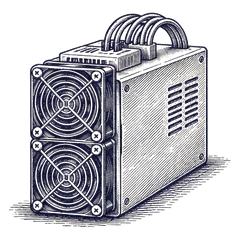 Technologyhow much the machine produces
Unpredictable
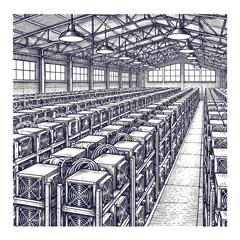 Difficultydepends on everyone else
 Valuethe price of bitcoin
“A quantum computer will break it”
A quantum computer able to break Bitcoin's signatures doesn't exist today. And Bitcoin gets upgraded: the rules change when the network agrees, as it already did with SegWit in 2017 and Taproot in 2021. The first step towards addresses that stand up to quantum computers, BIP 360, entered the archive of proposals in February 2026.14
“You can cheat”
The classic fear is the double spend: paying twice with the same bitcoin, taking advantage of someone who doesn't wait for confirmation. The set of people who know how to do that, says Amadori, doesn't overlap with those willing to face an angry barman.15 That holds in a bar where they know you. With large amounts and strangers you wait for confirmations, and the cheats you see here are the ones in the previous lesson.
There's an experiment here: the maths from section 11 of Satoshi's paper. With 10% of the hash power and 6 confirmations, a cheat succeeds about twice in ten thousand tries. It needs JavaScript; the lesson works fine without it.
Our own flyer, in 2026, had a list:
Never buy them and never accept them! They're used to fund terrorism and wars. They're used to launder illicit money. People buy drugs and smuggled weapons with them. The system uses enormous amounts of energy. They're constantly used to scam you. They're manipulated by the market. They have no intrinsic value. They're run by opaque systems. You lose them if you trust the wrong companies or people with them. You don't know what they'll buy you a year from now.
No, it wasn't about Bitcoin, but about the monetary system you use every day: the same one that makes everything keep getting more expensive.16
Three questions
You'll hear them in the shop. Have a go at answering, then open them.
“Doesn't it use too much energy?”
It does use energy, and that's where the security comes from. Miners go where energy is cheap, often where there's a surplus. According to Cambridge, more than half of the electricity they use comes from sustainable sources.
“Can you pay twice with the same bitcoin?”
For a coffee in a bar where they know you, the risk is small; with large amounts and strangers, you wait for the confirmations.
“Won't someone make a better one?”
Of all the protocols for connecting networks, only one is left. A network is useful where everyone already is.
-
Amadori at TEDxBelluno, 2022, min. 2 and min. 3. ↩
-
Amadori at TEDxBelluno, 2022, min. 12. ↩
-
Our calculation of 11 November 2026 on the daily average price in dollars published by blockchain.com, from 2010: for each day, the average of the previous five years, from 17 August 2015; since then it has practically never fallen. The tulip bubble: Anne Goldgar, Tulipmania, University of Chicago Press, 2007. ↩
-
Amadori on Interlogica, 2017, min. 1 and on luogocomune2, 2022, min. 41. ↩
-
Amadori on Sicurezza Bitcoin, 2025, min. 23. ↩
-
Amadori on Sicurezza Bitcoin, 2025, min. 4. His own account. ↩
-
Federal Reserve History, “Nixon Ends Convertibility of U.S. Dollars to Gold and Announces Wage/Price Controls”: the evening of 15 August 1971. ↩
-
Chainalysis, 2025 Crypto Crime Trends, 15 January 2025: the illicit share of the volume the company can attribute fell to 0.14% in 2024, from 0.61% in 2023. The figure covers all cryptocurrencies, not just bitcoin. ↩
-
La Miniera, 2022, min. 63. His own account. ↩
-
Criptovalute: in Val di Non la prima centrale idroelettrica per il mining, Punto Informatico, 18 January 2022. ↩
-
Cambridge Centre for Alternative Finance, Cambridge Digital Mining Industry Report, 28 April 2025: survey of 49 mining companies, 48% of the world's activity. ↩
-
BIP 360, a proposal by Hunter Beast, Ethan Heilman and Isabel Foxen Duke, merged as a draft in February 2026: Bitcoin Magazine. SegWit activated in August 2017, Taproot in November 2021. ↩
-
Amadori on Bcaucus, 2023, min. 9. ↩
-
Flyer from the Via Rialto shop, April 2026, in the shop's archive. ↩