
 Dispatches from the valley where you pay in bitcoin.
Lightning
“The old way, or Lightning Network?” they ask you at the newsagent's (our translation).
Why we need it
The Bitcoin ledger gets one new page every ten minutes, and you pay for the space. A payment recorded there is called on-chain, and for buying a house it's perfect. In December 2017, with the network clogged, paying for a coffee had become impossible.
If every coffee went onto the ledger, blocks would have to be enormous, and nobody could check them from home any more. With small blocks everyone can check, but only oil tankers and aircraft carriers get through. Lightning keeps the coffees off the ledger, so the ledger stays easy to check.
The euro: three networks
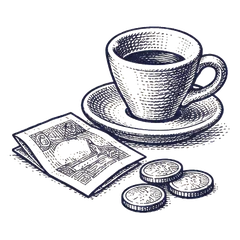 Cash the coffee
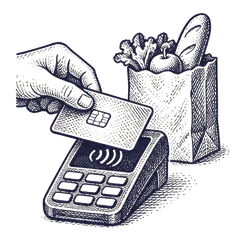 Card the shopping
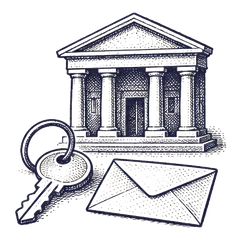 Transfer the rent
You don't pay the rent in coins.
Bitcoin: one network
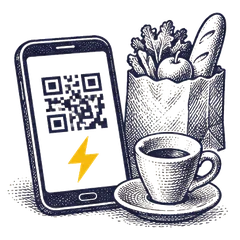 Lightning the coffee, the shopping
 On the ledger the house
The same money, from a cent to a house.
The bar tab
You always go to the same bar. Instead of paying for each coffee, you and the barman put €20 in a box with two locks, one key each. On a slip of paper you both sign, you keep track of whose money is whose, coffee after coffee. Whenever you like, you settle up: the box is opened and each of you takes your share.
There's an experiment here: the bar tab with genuinely signed slips and a payment that goes through the barman. It needs JavaScript; the lesson works fine without it.
Lightning works like this. The box is on the Bitcoin ledger; the slip isn't. And the barman can also put a coffee through for a friend who drinks at the same bar: slip by slip, the payment makes its way across town without touching the ledger.
What happens if someone cheats
The old slip is still signed, and anyone who tries to use it can lose everything: all it takes is for someone to notice. Noticing takes a set time, decided when the box is opened: the wallet has to be switched on at least once within that time, or else hand the watch to a service that checks for it.1
Box just opened
- You €20
- Barman €0
All the room to receive is on the barman's side.
After a €1 coffee
- You €19
- Barman €1
Your side is what you can spend, his is what you can still receive.
How much you can pay and how much you can receive. In the box the money sits on one side or the other: your side is what you can spend, the barman's side is what you can still receive. If the twenty euros were yours and you've spent them all, your side is empty and there's all the room to receive. They are called outbound liquidity and inbound liquidity. A convenient wallet opens or widens the box when needed. A small reserve stays put, for each of you, as a pledge: the specification suggests 1% of the box.2
Who carries the payment
If you and the shop don't have a box in common, the payment goes through other people's boxes. Each node, meaning whoever keeps those boxes open, passes it on to the next and keeps a fee: a fixed amount plus a percentage. Each node knows only the one before and the one after: it doesn't know who else is on the route, or how long it is. A big payment can also be split and arrive by several routes: to you it looks like just one.3
Open, pay, close
In schools we used another comparison for the channel: the blockchain as a notary. You pool some money and register it with the notary; if the other party breaks the agreement, the court rules in your favour; to close, you go back to the notary, together or on your own.
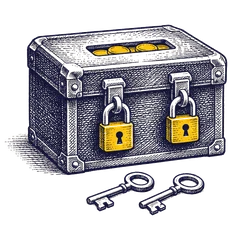 Openon the ledgerthe box with two locks
 Payoff the ledgerthe slips, as many as you like
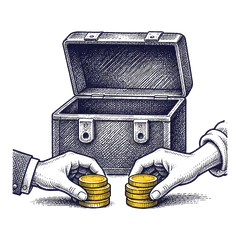 Closeon the ledgereach takes their share
Three ways to close
- By agreement quick, cheap
- On your own slower, costs more
- With an old slip whoever cheats risks losing everything
At the till
The shopkeeper types in the amount, you scan the QR code and confirm. A few seconds later the confirmation pops up on their phone.
What's in the QR. A Lightning invoice: a code that starts with lnbc and says how much, to whom and until when. There is one for every sale, and whoever creates it decides the expiry: if the customer takes too long the till says “Payment expired” and a new one is made, without anybody having lost anything.4
In September 2023 the economics YouTuber Paolo Coletti went round Rovereto paying for everything: his highest Lightning fee was 133 satoshis, 3.4 euro cents. The same day, on-chain, a €3 ice cream cost him €2.17 in fees.
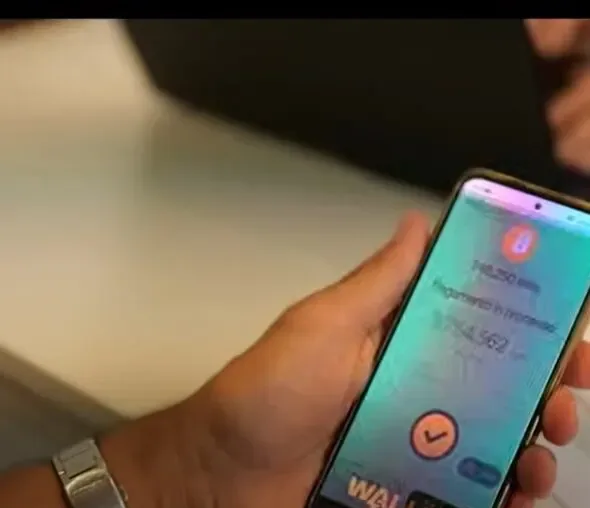
You can go a lot smaller than a coffee. Back in 2018 Amadori said: “I've even paid for an ice cube”. In 2025 he was still bringing it up, to show that you can pay less than a thousandth of a euro.
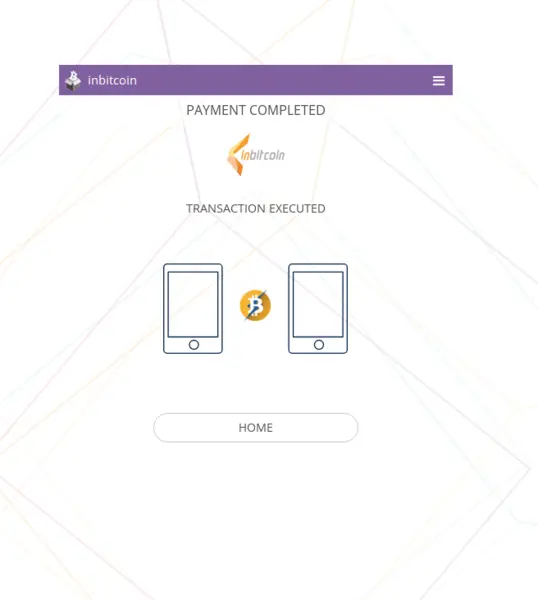
When it goes wrong
Invoice expired. The time has run out: ask for a new QR. Nobody has paid anything.
Payment failed. Your wallet couldn't get the satoshis through to the shop: for example there's no room in a channel along the way, or a node has a problem.5 You haven't lost anything: try again, or ask for a new QR.
Whoever is at the till looks at one thing only: you hand over the goods when the till says “Payment received”.
Here
The first time was at the start of June 2018 at the Mani al Cielo, a bar in Rovereto: an unsuspecting waiter holding the POS and the developers of RGB, a Bitcoin protocol, paying from the garden, each with a different wallet. On 29 June 2018, in Venice, Amadori showed a video shot a few days earlier: a drop of tonic added to a gin and tonic, paid for with Lightning. He presented it as the first bar in Europe to do it. Since 2023 it's been the normal way to pay in the Valley.
Who we rely on: an easy-to-use wallet with channels leans on a company's node, which opens them for you; a wallet on Spark has no channels and relies on a group of operators instead. If the wallet is self-custodial, the money stays yours, and if whoever you rely on disappears you go back on-chain, paying that day's fee. If it's custodial the company holds the money, as lesson 3 explains. For a coffee that's fine. For your savings, read lesson 6.
Three questions
You'll hear them in the shop. Have a go at answering, then open them.
“Why don't I just pay for the coffee on the ledger?”
You can, but space on the ledger costs money, whatever the coffee costs. One day in 2023, in Rovereto, a €3 ice cream cost €2.17 in fees; with Lightning, that day, 3.4 cents at most.
“What if the network drops halfway through a payment?”
Nobody can pocket the coffee halfway along: either it all arrives or it all goes back. When the connection comes back, the till finds the payment.
“Why does the first top-up cost more?”
To receive, you need room in the channel. The wallet opens one, the box with two locks, and that gets written on the ledger: that entry is what you pay for.
-
BOLT 5: whoever has money in a channel must watch the chain, and if the other side publishes an old slip, whoever notices can take all the channel's money. BOLT 2: the waiting time,
to_self_delay, is set when the channel is opened. Delegated checking is in the “Current limits” of our slides “Lightning Network”, December 2021. Read on 14 November 2026. ↩ -
BOLT 2, the channel reserve: “1% of the channel total is suggested”. Each side keeps it so as to have something to lose if they published an old slip. Read on 14 November 2026. ↩
-
BOLT 4: intermediate nodes cannot know which other nodes, besides the previous and the next, are on the route, nor its length. BOLT 7: each node announces, for every channel, a fixed fee (
fee_base_msat) and a proportional one (fee_proportional_millionths). BOLT 9: multi-part payments are thebasic_mppfeature, described in BOLT 4. Read on 14 November 2026. ↩ -
BOLT 11: the
lnbcprefix means Bitcoin on the main network; if the invoice doesn't state one, the expiry is 3600 seconds, one hour; after the expiry the payer should not attempt the payment and the payee should not accept it. That there is one per sale is how the till works, not a rule of the specification. Read on 14 November 2026. ↩ -
BOLT 4, the error messages:
temporary_channel_failurefor a channel that can't forward, for example because it has reached capacity, andtemporary_node_failurefor a passing problem with the node. Read on 14 November 2026. ↩